... by project

17. April 2026

Report on the suffering of blood mares and the current political debate in Switzerland

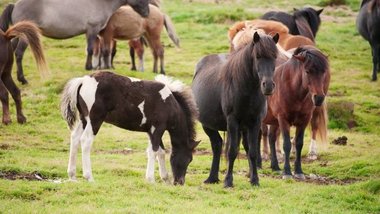
The online portal “Infosperber” provides a detailed report on the “torture hormone” PMSG in a new article and also addresses the current political debate over a legal ban on PMSG in Switzerland. The article explicitly references our research and explains why extracting the hormone from the blood of pregnant mares causes significant animal…

02. April 2026

Lamb transports before Easter: Broken legs, no water, barely any space

Together with Essere Animali we checked lamb transports on the way to Italian slaughterhouses.

Together with the Italian organization Essere Animali, we inspected long-distance transports of lambs to Italy shortly before Easter. In the process, we documented numerous violations of the animal transport regulations—including, for example, injured animals that were transported despite having broken legs. We filed complaints against two…

23. March 2026

New findings in the “Spiridon II” case: Organizer Allegedly Knowingly Accepted the Deaths of the Cattle

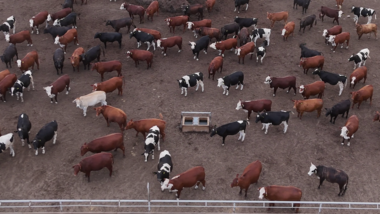
Following the tragedy on the livestock transport ship “Spiridon II,” which resulted in the deaths of hundreds of cattle, Turkish importers are leveling serious allegations against an Austrian livestock dealer. He is alleged to have knowingly accepted the animals’ deaths. Our investigations show: The horrific tragedy on the “Spiridon II” was not an…

25. February 2026

Open letter: Iceland must consistently apply EU law in the horse blood industry

Together with partner organizations, we are calling for the consistent enforcement of EU law in the Icelandic horse blood industry in an open letter. For us, it is clear that blood collection from pregnant mares for PMSG is not a secondary agricultural activity, but a scientific procedure in accordance with the EU/EEA Directive – and must therefore…

23. February 2026

Instead of traveling 9,000 kilometers over land and sea: 164 Danish cattle are flown to Kazakhstan.

The young cattle from Denmark in the barn in the Czech Republic before departure.

In November 2025, young Danish heifers were to be transported from Czechia to Kazakhstan on a journey of around 9,000 kilometers—across several countries, by road and sea. We prepared to document one of the longest routes we had ever researched. But the mission took an unexpected turn.

04. February 2026

Controlling animal transports in sub-zero temperatures

These piglets are transported from Denmark to Poland in conditions that are far too cramped.

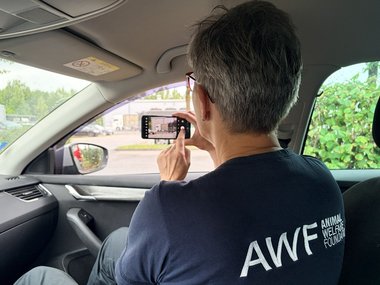
In sub-zero winter temperatures, we joined forces with French NGO Welfarm to inspect animal transports on a major Polish highway. Our observations once again highlight the problematic conditions faced by many animals on Europe's roads.

01. February 2026

Vessel "Darla" remains in port for the time being – our intervention is having an effect

The livestock transport ship “Darla” is currently docked at the port in Cartagena. (Archive photo)

On Wednesday, the livestock carrier "Darla" was scheduled to set sail for Algeria with almost 8,000 sheep on board – despite bad weather. Our warning to the authorities has stopped the ship for now, but the case shows once again that current EU regulations for animal transport by sea are inadequate, scientific findings are being ignored, and…

30. January 2026

Public action against animal transport in Athens

[Translate to English:] Iris Baumgärtner erklärt, warum die aktuelle Tiertransportverordnung nicht ausreicht. Im Vordergrund links die Europaabgeordnete Tilly Metz.

At the Syntagma metro station in central Athens, the Greek NGO "A Promise to Animals" organized a public event on live animal transport. In addition to film footage that shows the reality of live animal transport, there was also a panel discussion in which our project manager, Iris Baumgärtner, participated alongside representatives from other…

27. January 2026

Focus on Animal Transport by Sea – Maria Boada Saña Speaks at Conference in Paris

Maria Boada Saña explains why animals transported by sea are not just suffering in isolated cases, but systemically.

Last week, a specialist conference at the Palais du Luxembourg in Paris provided insights into the reality of live animal transport by sea. Our project manager for ship transport, Maria Boada Saña, was there as an expert to highlight the structural causes of animal suffering in live exports by ship.